Showing posts with label Microsoft. Show all posts

Wednesday, August 29, 2012

How do you sell a problem like Next Gen?

Games Industry International had a really poignant article written by Johnny Minkley that really began to dissect the next gen launches of previous systems and what might be necessary to sell the ever looming new systems on the horizon.

The article mentioned, of course, how tired consumers are getting of the current gen systems and the cyclical money machine that the industry has become. Whatever the next gen systems are like, Minkley hit the nail on the head when he said that "the first thing to say is it had bloody better be a 'quantum leap' from the creaking innards of today's systems."

A quantum leap would be nice. More processing power, graphical capability, memory and refined tech could really help those suffering from constant Red Ring fear. Not to mention some tighter online security. Yes, Sony, I'm looking at you. But even shiny bells and whistles will not really "sell" the consoles to consumers. Sure, people will buy the systems out of habit, but will we really see them as the next gen that we've been waiting for?

Minkley said "looking at every single launch title across PS2, Xbox, Xbox 360 and PS3, I see only a single, clear system-seller in there: the original Halo." I have to agree with him, despite my own indifference to the series. When "Halo" came out with the original Xbox system, that was what I associated Microsoft's gaming platform with, "Halo." I couldn't for the life of me tell you what came out with the PlayStation 2, and the only thing that stuck out for the PS3 was "Uncharted" due to its graphical glory and interesting story. The Wii, obviously, was heralded in with "Red Steel" and other such failures, much to Nintendo fans' dismay.


Remember this? Of course you do.
"Halo" stands strong as a game that really sold a system though. You could only play it if you had an Xbox and therefore, you needed one. There are some folks who never upgraded their Nintendos, PlayStations, and even Xbox's, but merely moved from one system to another's more advanced counterpart. We all know that person who has a PS2 and an Xbox 360 or that one guy that still has his Xbox but seven thousand Sony titles to fill his time on his PS3.

But hidden in the middle of the article and a little at the tail end is the real point that Minkley nailed. Microsoft may pull ahead if it begins to make deals with cable providers and offer some sort of package deal with the new next gen Xbox's to give television as well as gaming. This would be a brilliant move and that kind of diversification of tech is what is selling most frequently these days.

Many bought a PS3 solely due to the fact that it came with a Blu-ray player installed in it. Even Blu-ray, though, had difficulty achieving widespread success. Had it become the dominant form of in-home digital media, the PS3 would have trounced any sort of effort by Microsoft or Nintendo, simply because of the system's versatility.

Next gen systems may begin fighting to provide the consumer with a jack-of-all-trades rather than a quality gaming experience alone. Personally, this makes me weep for the future of gaming if we're just trying to make compact computers that display on televisions rather than machines built to provide us with the most streamlined gaming experience we can. Really, that's what these machines have become, and if I had wanted that I would have just upgraded my PC over the years and not cared about getting a system at all.

Minkley says that the war might be fought over contracts and who can give us more bang for our buck when it comes time for release. I think he's right. What the fight should be over, though, is who can make the next "Halo" type game and really make something that draws people to buying the system rather than just giving us a load of expected next gen titles and then waiting a year for something truly special.

Saturday, August 4, 2012

Hands on Halo 4's multiplayer modes

Master Chief has a posse, apparently.
Less than one hundred days remain until the newest (chronologically and developmentally) installment in the “Halo” series is released, and every day the hype train grows by a few cars.
Many fans early on in the development of “Halo 4” feared that is was being driven toward “Call of Duty”-style gameplay, but having gotten hands-on time with it at both E3 and San Diego Comic-Con this year I can safely say that is not the case.
This game stills looks and feels like the “Halo” you know and love, only with a few more characters and a new coat of visual and aural paint.
At E3 I got the chance to play a round of War Games, which is what the company now helming all things “Halo,” 343 Industries, calls the competitive multiplayer portion of the game. If you’ve ever played a round of competitive multiplayer in a “Halo” game, you’re going to feel right at home in this mode. It’s the same basic premise of red team versus blue team in a variety of game types including deathmatch, which is the mode I played, oddball and king of the hill.
Players take on the identity of their own Spartan-IV in War Games.
There are few new game modes including one called Regicide, in which the player with the highest score becomes the primary target for all other players.
Several fan-favorite weapons return in “Halo 4,” including the DMR (designated marksman rifle) from “Halo Reach” and Battle Rifle from “Halo 2” and “Halo 3.” Brand new weapons added to the playable arsenal include a shotgun-type weapon called the Scattershot and the Light Rifle, which acts like a fancy alien sniper rifle.
These new weapons are available for use in both competitive multiplayer and "Halo 4's" new cooperative multiplayer story dubbed "Spartan Ops."

Spartan Ops follows the crew of the UNSC (United Nations Space Command. The good guys) Infinity a few months after the end of the main, single-player storyline. It will be delivered to players over ten months after the release of "Halo 4," and one chapter will be made available for download free of charge each week. Each chapter will consist of five missions as well as a few-minute long cutscene of story material.

Not much has been revealed in terms of story for this mode because it takes place after the events of the main game, which inevitably means spoilers galore, so at San Diego Comic-Con I got a chance to play one chapter in an episode of Spartan Ops without being given any story background.

Promethean Knights are one of the new enemy units in "Halo 4."
The chapter I played involved myself and three other players moving through a mountainous, lava-ridden area toward some kind of artifact of unknown use or origin. Covenant enemies return to bar the Spartans from reaching their goals as well as a few new enemies of a species that has not yet been revealed by the developers aside from being related in some way to the mysterious Forerunners.

These new enemies are highly advanced artificial intelligence constructs, according to in-game dialog, and they work together to take down the player characters much more cohesively than the Covenant ever has in past games. If a grenade is thrown at one enemy, another can catch the airborne attack and hurl it back at the player. This type of enemy cooperation leads players to rethink their strategies, and mixes up the game just enough to make it fresh and new.

An issue I had with my time with the game was that the chapter only took about 15 minutes to complete, and consisted mainly of walking to a door and fighting off a wave of enemies while we waited for it to open, only to move onto another door and then onto the final objective. It seemed quite simple and repetitive, but that could have been because the developers chose a mission that was not too heavy on story content as not to spoil it for those who played.
One of the biggest qualms I had with the game is that none of the weapons felt hefty enough to take down the massive Spartan-IVs I was up against. I think this feeling of lack of weight comes directly from the revamped sound design, which actually threw me off pretty good for the better part of the match.
Everything sounds different than in past "Halo" games. Guns, vehicles and even the characters’ footsteps have been rethought and rerecorded

The Covenant have been redesigned to look more fearsome.
There are a considerable amount more customization options for players to choose from as well, and 343 Industries hasn't even revealed all the different armor permutations, skins and emblems yet.

Despite some fans' fears, "Halo 4" appears to be keeping in tune with the legacy left behind by its creators, Bungie, and will most likely be a huge success for 343 and Microsoft come Nov. 6 when it's released.

Friday, July 27, 2012

Rhythm and Motion


As the Nintendo Wii came out of the shadow of the Nintendo Revolution rumor, movement based gaming suddenly received a jolt of life on the home console. Games that were traditionally thought of as arcade titles and not feasible for the home environment were now entirely possible and encouraged.
However, the gaming community began to see this as a dilution of their hallowed pastime. Now that everyone was encouraged to play since the controller became as complicated as their bodily movement, gamers felt that their hobby was no longer unique and the hardcore games were fading away for more family friendly titles.

Those rabbids are...ravin'.
The first wave were games like "Red Steel" or the surprisingly popular "Rayman: Raving Rabbids." Simply enough, the tech focused on moving the controller in time with directions or beats to get the correct sequence. I mention these before the shameful peripheral that was the PlayStation EyeToy or even the home version of "Dance Dance Revolution" because the Wii games were actually considered triple-a titles.


"Red Steel" was shamed and hailed as a glitchy and bugged-out game that should never have been a launch title. Sad, but true for the game that was actually somewhat fun if it wasn't for the awful use of motion control. "Rabbids," however, was socially looked down on, but reviewers and consumers ate it up. The gaming community couldn't really see any interest in it, and yet copies sold.


It took time, but eventually Nintendo figured out a somewhat workable use for the Wiimote and it became commonplace and accepted to a degree to those who were fans of the company. Soon, Sony and Microsoft were announcing their own movement based peripherals that were eerily similar to Nintendo's design, except for the Kinect using everything but a physical item in your hand.


Now, motion-based gameplay is still a gimmick, but one that gaming companies use cautiously. "Ghost Recon: Future Soldier" used in in their weapon customization system, which was probably the best use for the Xbox Kinect in recent years. The Nintendo Wii's motion controls have been streamlined so much so that even a novice to video gaming can use the system to workout with. Oprah gave her entire audience Wii systems and copies of "Wii Fit" during a taping of her daytime talk show. Sony still remains an the back of the race, unable to truly garner the attention of their customers to the PlayStation Move, awarding it a mediocre place in history just like the EyeToy.


What with "Dance Central" and "Just Dance" on Xbox and the Wii, motion controls are becoming more sophisticated than ever, completely removing the need for the "Dance Dance Revolution" floor pads.


The fever pitch of dancing games and music-based gameplay would not have reached the fever pitch that it did without the success of Harmonix's "Guitar Hero" franchise, which has been taken over by Neversoft, or their other music-based hit series, "Rock Band." Gamers could now feel a connection to something other than cyclops evisceration and collecting coins by working to make the chords and notes of their favorite songs happen. They felt a sense of accomplishment, and there was even a feeling of skill as people began to master certain songs.


Of course, gaming companies felt that this meant they could make comebacks for lightguns and props. Who could forget the completely awkward and unusable attachments to Wiimotes for "Wii Sports" made by Nerf? Or the ineffective and cumbersome Wii Zapper? Let's not forget the serious piece of hardware that Sony made recently that looks almost exactly like the Wii Zapper for their Move controllers and shooter games.


As musical gaming became more sophisticated and mainstream, drum sets were added along with keyboards and microphones that detected correct pitch. An entire band could be formed in a living room instead of a garage. The logical evolution? "Rocksmith."


The Vault tested out the effectiveness of "Rocksmith" and proved that it is indeed a working learning tool for those players looking to strum a six string. Now the gauntlet has been thrown down, and gamer speculation rises as to what the next instrument or game will be to teach the masses rather than just entertain them.


Success in both movement and music simulators, a term used hesitantly now as "Rocksmith" actually teaches the player, is an excellent lesson in game development and market manipulation.


Nintendo took a chance with the Wii. One could argue that motion-based gameplay was the evolution of the industry, but nonetheless it was a gamble to be the first in the running with that. Again, we must acknowledge Sony's attempt with the EyeToy, but it's utter failure cannot be ignored. It was no competition for a system built around motion control.


Even the marketing focused on physical movement.
The idea of the player actually moving meant that they were invested in the action and the game more than if they were merely sitting in a chair and watching their character do all the action. It's the sense of accomplishment that one gets from actually killing the dragon instead of watching someone else do it as you press four buttons. Of course, games are not there just yet, but they are moving towards it.


To that same idea, however, a gamer getting a high score when playing "Guitar Hero" or "Rock Band" feels that they've actually done something because they've made the music. Yes, they are still pressing buttons, but "Rocksmith" and the pro peripherals for "Rock Band" change the playing field because at that point a gamer is using an actual instrument.


How do game makers achieve a sense of accomplishment and investment in their games? If a developer can get the player more involved in a game, surely they'll want to keep coming back for more That's half the reason conversation options exist in RPGs, so that the player feels that they are responsible for the choices and events that occur. If that could be translated into actions, then perhaps something big would happen.


Looking at the musical game evolution, the argument could be made for the idea that if the player is engaged in learning something, then they will be more invested and more motivated to play. The "Dance Central" games may teach someone nothing but line dancing techniques, but they do teach you something. There have been no recorded instances of people actually dancing like that in clubs, but it's really only a matter of time now.


From a handheld device, to a person.
Buttons no longer do the job of getting the player into the game. As gaming has become more social, mental and physical through multiplayer, engaging storylines and technological advancements, more is expected from a game. People are now used to epic storylines spanning several games like "Mass Effect." A multiplayer element that pits gamers against other gamers where stories and experiences can be shared is almost standard in any game that features a gun. If the game uses motion controls, the way to garner success seems to be teaching something actually relevant that can be used with others or to give a desired outcome like learning an instrument or getting fit.


The bar has been raised, expectations have been changed and just sitting on the couch doesn't cut it anymore. The industry has changed and it's time for games to reflect that.

Tuesday, July 12, 2011

Xbox Music para este otoño.


Microsoft ha confirmado que el servicio Xbox Music con más de 11 millones de canciones estará disponible a partir de este verano. Además, según ha informado Steve Ballmer, CEO de Microsoft, será compatible con Kinect, permitiendo a los usuarios buscar música mediante el reconocimiento de voz.

Lo que no nos queda claro es si Zune desaparecerá o permanecerá como un servicio especial para ver vídeos y otros contenidos digitales.

Tuesday, June 28, 2011

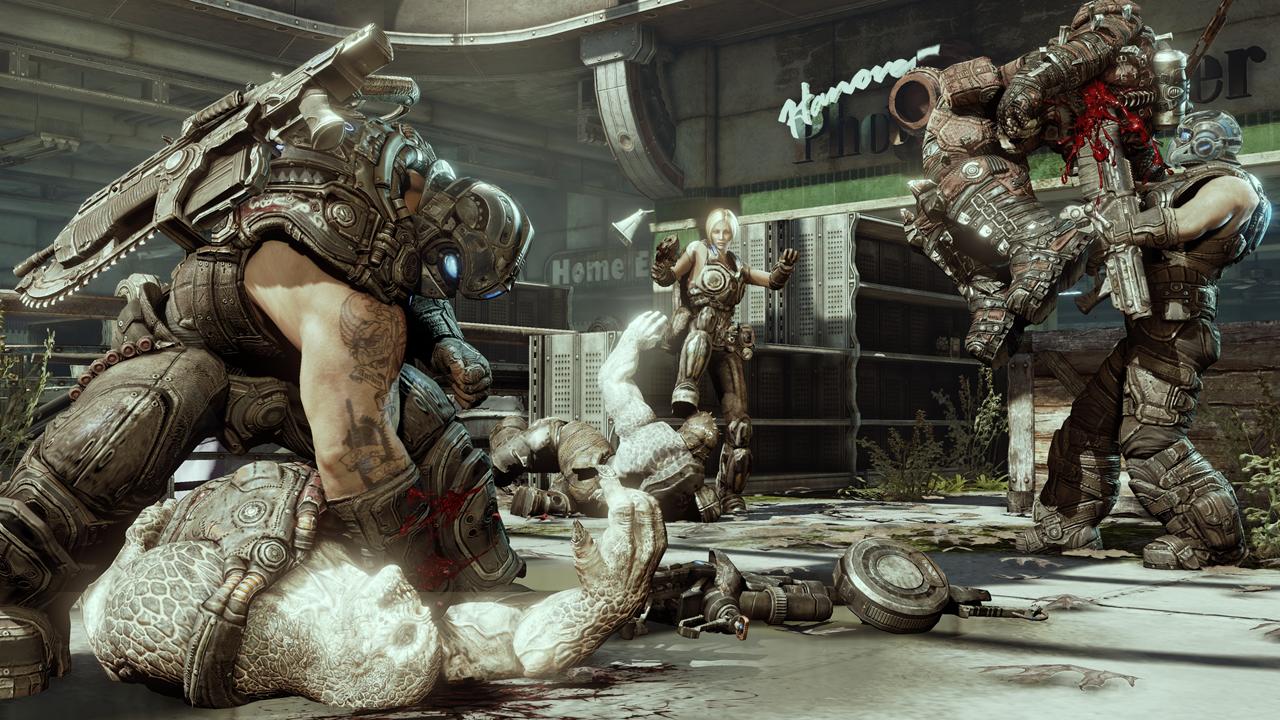
1 millon de reservas de Gears of War 3 en USA.


Los chicos de Epic Games deben estar dando saltos de alegría al saber que aún sin estar finalizado el juego, ya se han reservado un millón de copias del mismo en Estados Unidos. Ya se puede considerar a este tercer capítulo de Gears of War (que teóricamente cierra la saga) de auténtico exito!

Saturday, June 11, 2011

Resumen: E3 2011.


¡Hola amigos/as! Esta semana estamos de celebración. Y es que todos los que amamos el mundo de los videojuegos estamos de enhorabuena. El E3 ha finalizado y ha dejado tras de sí, un catálogo lleno de sorpresas y novedades. ¿Qué? ¿Cómo? ¿Que aún no os habéis empapado de todas los acontecimientos? Pues no perdáis un segundo más y acompañadme en este inolvidable viaje. Here we go!


Conferencia de Microsoft.

Dicen los expertos que la conferencia ofrecida por la compañía americana fue un tanto discreta y carente de novedades. Sintiéndolo mucho, yo no lo veo así. Toda la ponencia estuvo apoyada en demostraciones en las que destacó el increíble Call of Duty: Modern Warfare 3, el survival-horror-plataformas Tomb Raider y Gears of Wars 3. Os dejamos la demo ofrecida sobre éste último.


Y bueno… ¿en qué se centró la conferencia mayormente? Microsoft estuvo enfocado en Kinect. Tanto es así, que se mostró la compatibilidad en diversos juegos como Fable: The Journey, Ghost Recon, Star Wars Kinect ,una nueva IP basada en la antigua Roma llamado Ryse o aplicaciones de XBOX Live. Los tres títulos más aplaudidos fueron el remake de Halo, Mass Effect 3 y el teaser del nuevo título del jefe maestro que protagonizará una nueva saga, Halo 4.


Puesto que nuestro blog está orientado a mayores y algunos menos creciditos. Os dejamos con un nuevo juego que deleitará a los más peques de la casa: Kinect Disneyland Adventures. ¡Disfrútenlo!


Conferencia Sony.

El evento de Sony comenzó con un espectacular tráiler de Uncharted 3 en 3D y una demo del mismo (la cuál, os mostramos a continuación). La gran apuesta de Sony llegará el 1 de noviembre y contará con una beta multijugador a partir del 28 de junio. Otra tercera parte y también exclusiva se vio a continuación en 3D, Resistance 3 de Insomniac.


Momento para las remasterizaciones, God of War Origins Collection (los dos títulos de PSP) e ICO & Shadow of the Colossus Collection, ambos en HD y 3D previstos para este septiembre. Parece ser que este tipo de remasterizaciones sólo serán compatibles con la hermana mayor de Sony: PlayStation 3.

Momento Move, del cual ya se han vendido la nada desdeñable cifra de 8,8 millones de unidades. Se presentó Medieval Moves y de igual modo se anunció la posibilidad en LittleBigPlanet 2 de crear niveles con este dispositivo. La guinda la puse un nuevo video de trailer de Sly Cooper, juego muy conocido y esperado por los más jóvenes de la casa.

Quisiera destacar el trailer de Bioshock Infinite de Irrational Games presentado por el diseñador Ken Levine, quien anunció la compatibilidad del título con Move. Además, la versión del juego para PlayStation 3 incluirá el primer BioShock en el mismo BluRay. Y los amantes de las portátiles también están de enhorabuena pues la saga BioShock también llegará a PS Vita.


Sony finalizó su conferencia mostrando un video con todas las novedades que recibirá su consola más aclamada: PS Vita. Finamente, fue recibida entre sonoros aplausos la gran notica sobre esta portatil: el precio. PS Vita estará disponible estas Navidades por 250€ (modelo Wifi) y 300€ (modelo 3G). Increible la granestrategia de Soy para competir con su directa rival, Nintendo 3DS.


Conferencia de Nintendo.

“La gran sorpresa del E3”. Y apostillo esto porque la conferencia de la gran N tuvo sus claroscuros. Y es que Nintenfo hizo una confusa presentación en al que al término de ésta, no se tenía claro si se había presentado una nueva consola, una portátil consola o simplemente un dispositivo. De todas formas, Satoru Iwata ya ha pedido disculpas al respecto.

Pero centrémonos en lo que es la verdadera noticia. Wii U marcó la conferencia E3 2011 en Los Ángeles. Muchas novedades tiene este dispositivo estrella, el primero y quizás más impactante es su apariencia, lo que hizo que muchos de los testigos de la presentación se cuestionaran si era un tablet de Nintendo o un juego.


Este dispositivo de comando tiene una pantalla de 6.2 pulgadas que incluye la posibilidad de usar la pantalla mediante comandos táctiles, tal como una tablet pero sin la mayoría de sus características ya que solo servirá para ejecutar los comandos habilitados para cada juego, manteniendo también los botones laterales clásicos.

Para quienes ya tienen el primer modelo de Wii, los dispositivos anteriores son compatibles y podrán utilizarlos sin ningún problema.

Fiel a su estilo innovador la nueva Wii U será la primera en mostrar juegos en alta definición ­HD­ lo que hará que la experiencia del jugador sea más intensa y real. Por otro lado la consola de juegos dispondrá de un CPU de IBM en su interior.


Entre las novedades con respecto a títulos nuevo, nada sorprendió, un nuevo Mario 3D, Mario Kart 3D y Luigi´s Mansion 2. Quizá, lo más sorprendente (juntoa Wii U) fue el regalo que nos hará Nintendo por el 25 aniversario de Zelda: Zelda Four Swords.

Y vamos finalizando…

Quería terminar, dando las gracias a todos los que habéis leído con atención estas líneas. Esta página de videojuegos no sería posible sin vuestro apoyo condicional. Me gustaría por punto y final con uno de los videos más emblemáticos y que ha sorprendido (para bien) frente a las críticas recibidas en un primer momento. Y es que... Final Fantasy XIII-2 parece que no defraudará a nadie. Juzguen ustedes mismo. Que tengan un buen fin de semana. Paz y amor.


Wednesday, March 30, 2011

Análisis: Islands of WAKFU - Xbox 360.


El primer juego del jóven estudio francés ANKAMA Play llega a Xbox Live Arcade. Señora y señores, estamos hablando de Islands of WAKFU.

Ambientado 10.000 años antes de DOFUS, Islands of WAKFU nos traslada en un mundo colorido, lleno de guiños del famoso MMORPG y dónde encarnaremos a Nora, una guapísima Selaptrop que irá acompañada de su alter ego Efrim, un dragón. Nada más empezar, IoW nos recordará a los juegos de Super Nintendo, es una mezcla de Beat-em-up y Shooter en el que tendremos que usar astucia e inteligencia.

Nora es una gran luchadora en el cuerpo a cuerpo, mientras que Efrim es excelente a distancia. Podremos alternar entre uno y otro con tan sólo pulsar el botón Y. Una delicia ya que algunas situaciones en las que nos veremos bloqueados, se resolverán con tan sólo una pequeña pulsación en el botón.

La magia de IoW no proviene solo del hecho de poder jugar y alternar ambos personajes, sino de la riqueza de la historia y de la ambientación que le han dado. Nora y Efrim serán las últimas razas de su especie (los Selatrop – Portales al revés / Dragones) y como su nombre indica harán uso de portales para teleportarse de un lugar a otro. Estos portales surgen de las fuentes de Wakfu, o lo que es lo mismo una metáfora de la vida. Podremos recolectar ese Wakfu de las plantas y de los seres vivos, en detrimento de destruirlos y de provocar un mundo peor lleno de Stasis. En nuestras manos quedará hacer que el mundo esté bien balanceado y que ninguna de las dos fuentes prevalezca sobre la otra.

Un concepto original, divertido, y que ayuda a disfrutar y conocer más sobre el mundo de DOFUS y del venidero WAKFU por tan sólo 800 Microsoft Points. Eso si, el control algo complejo (pues todos los botones tienen un uso) hacen que este juego no sea sólo para principiantes y produzca un auténtico reto a los jugadores. Eso si, hay un modo “Diosa” que lo hará algo más accesible.

Gráficamente es colorido, bien definido, aunque si es cierto que los movimientos son un pelin bruscos y cuesta algunas veces apuntar con Efrim. Un pequeño reto que pasaremos tras unas horas de juego y que hacen de Islands of WAKFU uno de los juegos más entretenidos del bazar de Xbox Live.

Para terminar, comentar que su modo multijugador para 2 jugadores (que compartirán además la misma barra de energía) le suma puntos aunque si es cierto que echamos en falta un modo online. Por lo demás, un juego muy interesante que si sois fan del MMORPG DOFUS u os gustan los Beat-em-up no debéis perderos bajo ningún concepto.

NOTA FINAL:
8/10

Friday, February 25, 2011

Carátula de Gears of War 3.


Microsoft ha presentado ayer mismo la carátula de Gears of War 3 así como una beta multijugador prevista para abril-mayo. Esta beta podrá conseguirse via la edición coleccionista de Bulletstorm para Xbox 360, pero no será la única forma al parecer.

¡Ya estamos deseando probarlo!

Wednesday, February 23, 2011

Gears of War 3 tiene fecha de lanzamiento.


Los europeos y los americanos pueden ir anotando la fecha en sus calendarios, Gears of War 3 se lanzará el 20 de septiembre 2011. No se ha dicho nada al respecto de Japón, pero se supone que saldrá unas semanas más tarde.

Tuesday, February 8, 2011

3 nuevas imágenes de Gears of War 3.


Si nos preguntan que saga de nueva generación ha marcado un antes y un después, la primera que me viene en menta es Gears of War. Epic Games, junto a Microsoft han sabido dar en clavo con este espectacular Shooter, que si bien el segundo no impresionó tanto como el primero, si desveló gran parte de lo que Xbox 360 tenía en sus entrañas.

Por si eso fuese poco, Microsoft nos hace llegar estas tres espectaculares imágenes de Gears of War 3 donde una vez más, la proeza gráfica parece insuperable. Ya estamos deseando hincarle el diente.


Thursday, January 20, 2011

Kinect ateriza a PC.


Microsoft no quiere dejar pasar la oportunidad y anuncia oficialmente que Kinect funcionará con PC. De esta forma evita que competidores copien su tecnología y la usen para otros fines. Debido al hackeo del dispositivo, la decisión de la compañía es la correcta si quiere mantener un posición fuerte en el mercado.

Además, han anunciado un SDK para que desarrolladores terceros realicen sus propias aplicaciones con el dispositivo de Microsoft.
Related Posts Plugin for WordPress, Blogger...