Every company seems to be breaking in to the cloud-gaming market with a different strategy. NVIDIA is doing this by taking the console hardware out of the picture completely with its GeForce GRID technology.
GeForce GRID is essentially the idea of moving your graphics card to a server farm and sending those images back to you over a standard Internet connection. In gaming applications, you have a controller that is hooked up directly to your TV or other device that sends your input to NVIDIA’s servers where the graphics are rendered and then streamed back to you in real-time.
The advantages of doing this are that you don’t have to continually upgrade your PC to stay on the bleeding edge of gaming technology. As cloud technologies and networks continue to grow faster, your gaming experience auto-magically gets better without hitting your wallet as much as getting a new graphics card would.
GRID is competing with OnLive's existing streaming service by claiming faster response times and significantly improved graphics using their own Kepler-architecture graphics cards.
NVIDIA claims the latency when compared to a standard console is nearly matched, but in my opinion there is still work to be done.
GRID is competing with OnLive's existing streaming service by claiming faster response times and significantly improved graphics using their own Kepler-architecture graphics cards.
NVIDIA claims the latency when compared to a standard console is nearly matched, but in my opinion there is still work to be done.
NVIDIA demoed the technology at E3 2012, and while I was intrigued in a technological, nerdy kind of way, I was underwhelmed as a gamer. The idea of moving the graphics processing power to a server farm miles away from me and transmitting high quality images at a decent frame rate in almost-real time directly to my TV is nothing short of impressive, but as a gamer, the abysmal response time for any little input is pretty pitiful.
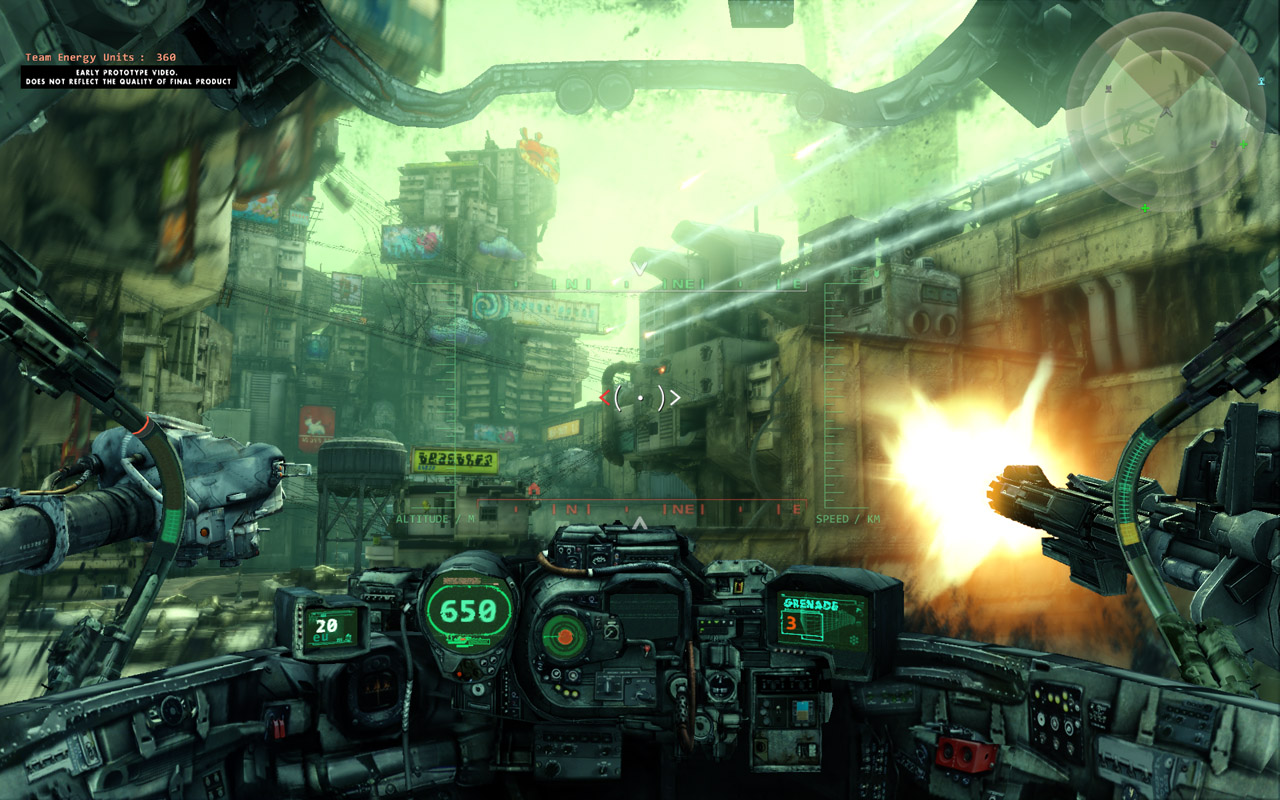 |
| Hawken's graphics were impressive, but maybe not the best demo choice because of the response time. |
The demo I played was mech-themed first-person shooter "Hawken" using the Gaikai online gaming app on a Samsung Smart TV. The decent graphics on screen and the absence of a console was what caught my attention. I started to play, getting a feel for the shooting and navigation controls and one of the first things I noticed was the lag.
NVIDIA says they’ve been able to get the lag down to 10ms, a time that my friend didn’t even notice but was incredibly debilitating for me.
NVIDIA says they’ve been able to get the lag down to 10ms, a time that my friend didn’t even notice but was incredibly debilitating for me.
The whole idea reminds me of those days when I would stay at a hotel that had an N64 controller in the room. I could use the remote to browse through a bunch of titles and pay some price to play on demand without the console actually sitting right in front of me.
NVIDIA’s GRID technology itself is pretty amazing, but it’s going to take some time before the supporting technologies like network speeds are going to be able to support an experience to compete with standard consoles.


